
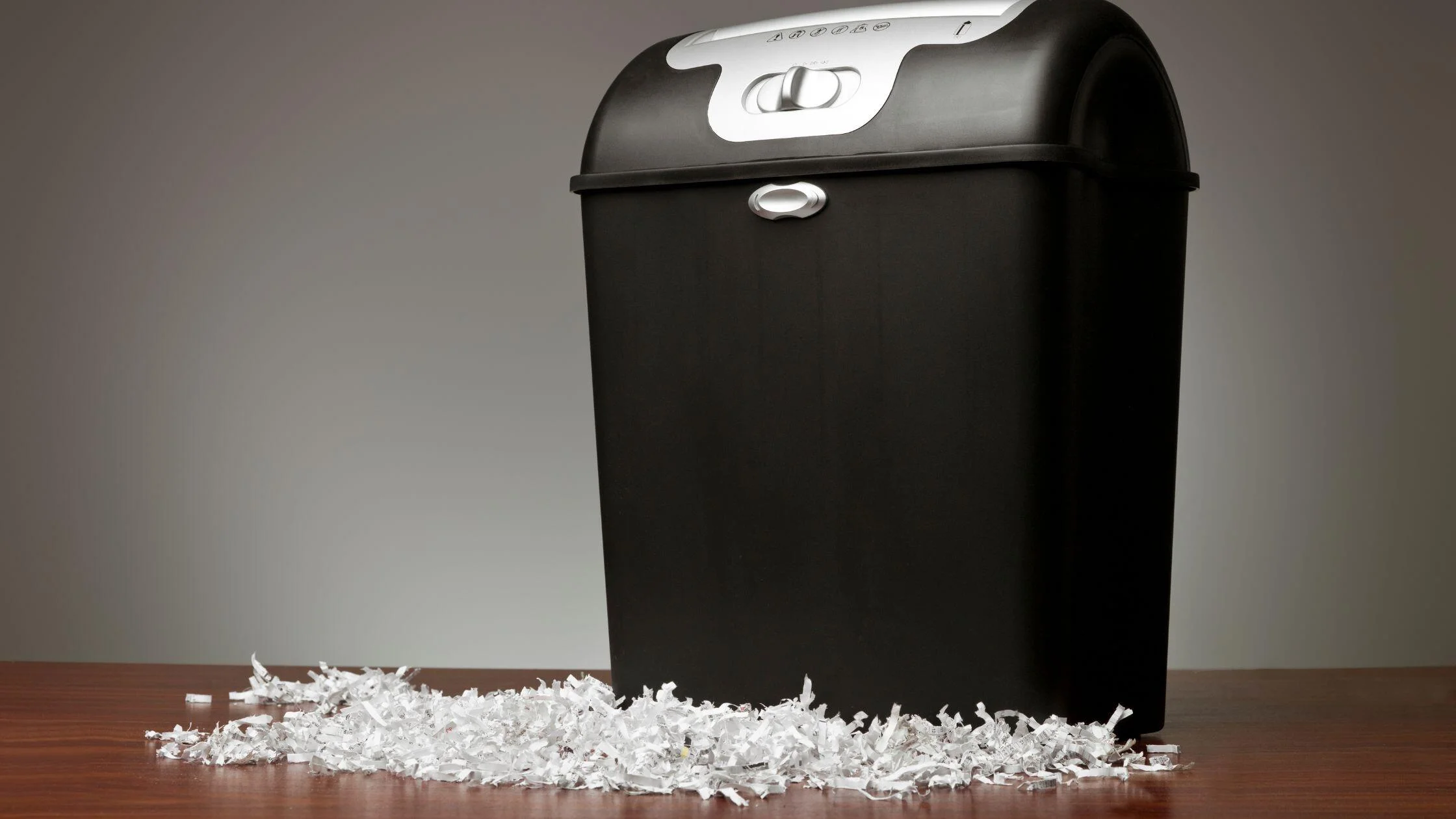
Throwing sensitive paper in the trash is not just sloppy. In Massachusetts it can break three layers of law at once: a federal privacy rule, a federal disposal rule, and a strict state data-protection statute. Each one expects you to destroy records in a way that protects the people behind the data.
In This Article
This guide breaks down the shredding laws that apply to your business, what each one demands, and the simplest way to stay on the right side of all of them. Need a compliant purge handled this week across Boston, Lowell, or New Hampshire? Call (978) 636-0301.
Stay compliant without the headache
Certified destruction plus the certificate that proves it.
Schedule Compliant Shredding Get a Free QuoteThe Massachusetts Data Destruction Law (201 CMR 17.00 and M.G.L. 93I)
Massachusetts holds one of the strongest data-protection standards in the country. The state’s data security regulation, 201 CMR 17.00, and the disposal statute M.G.L. Chapter 93I require any business that holds personal information about a resident to destroy it so it cannot be read or reconstructed. Personal information here means a name paired with a Social Security number, a driver’s license number, or a financial account number.
The law applies whether you are a single-location shop or a regional firm. If you hold the data, you own the duty to destroy it properly.
FACTA: The Federal Disposal Rule
The Fair and Accurate Credit Transactions Act, FACTA, requires any business that uses consumer report information to dispose of it safely. That sweeps in far more than banks. Landlords, employers, insurers, and any office that runs background or credit checks fall under it. The standard is the same theme: burn, pulverize, or shred so the information cannot be read or reconstructed.
HIPAA: For Anyone Handling Health Information
If your business touches protected health information, HIPAA requires you to render that information unreadable and impossible to rebuild when you dispose of it, under a secure chain of custody. Medical and dental offices know this, but so should employers who hold health plan records and any vendor who handles patient data. For the medical-office specifics, see our guide to HIPAA shredding requirements.
What Happens If You Do Not Comply
Regulators do not treat improper disposal as a paperwork slip. Penalties stack across the laws above and can run from thousands to tens of thousands of dollars per violation, plus the cost of notifying everyone whose data was exposed. A single dumpster breach can trigger a state investigation, federal exposure, and a public notification you would rather avoid.
How to Stay Compliant Without the Headache
You do not need an in-house compliance team to get this right. You need a destruction process that is secure end to end and that leaves you proof.
The simple version
- Set a retention schedule, then destroy records promptly once it lapses
- Never leave sensitive paper in open trash or recycling
- Use cross-cut or finer destruction, not a strip-cut office machine
- Keep a Certificate of Destruction for every purge as your audit trail
- Train staff so the rule survives past one careful employee
Every shred we handle is destroyed at our secured off-site plant, certified, and recycled. You get the Certificate of Destruction that satisfies FACTA, HIPAA, and the Massachusetts statute in one document.
Compliant Since 2007
Neighborhood Parcel Business Center has kept Massachusetts and New Hampshire businesses compliant since 2007, with a BBB A+ rating. Visit 1215 Main St Unit 115, Tewksbury, MA 01876, Monday through Friday, 10 AM to 5 PM, hours subject to change.
Put your compliance on paper
Book a certified purge and walk away with your audit trail.
Call (978) 636-0301 Request a QuoteShredding Law FAQs
Which shredding laws apply to a small business in Massachusetts?
Most small businesses fall under the Massachusetts data law (201 CMR 17.00 and M.G.L. 93I) plus FACTA. Any business touching health data also falls under HIPAA.
Does the Massachusetts data law apply if I only have a few records?
Yes. The duty attaches to holding personal information about a resident, not to the size of your business or the number of files.
Is recycling the same as compliant destruction?
No. Placing readable documents in recycling is not destruction. The law requires the information be made unreadable and impossible to reconstruct first.
What proof do I keep that I complied?
A Certificate of Destruction. It records that specific records were destroyed on a given date under a secure process, which is the evidence regulators ask for.