

Many Cambridge small business owners face a common challenge: confidential paperwork accumulates faster than they can securely dispose of it. Patient charts, client files, billing records, and administrative documents pile up in offices, closets, or storage areas, creating both a space problem and a privacy concern. While some businesses try to handle shredding internally with office machines, others recognize that professional off-site shredding offers a more secure, efficient, and compliant solution.
In This Article
This guide explains what off-site shredding service entails, when it makes sense for your Cambridge business, how the process protects your information from pickup to destruction, and what to look for in a provider. Written for business owners, office managers, and administrators in Cambridge, Boston, Newton, Andover, and Worcester County, the focus is on practical benefits and real-world considerations—not technical jargon or sales pitches.
What Is Off-Site Shredding Service?
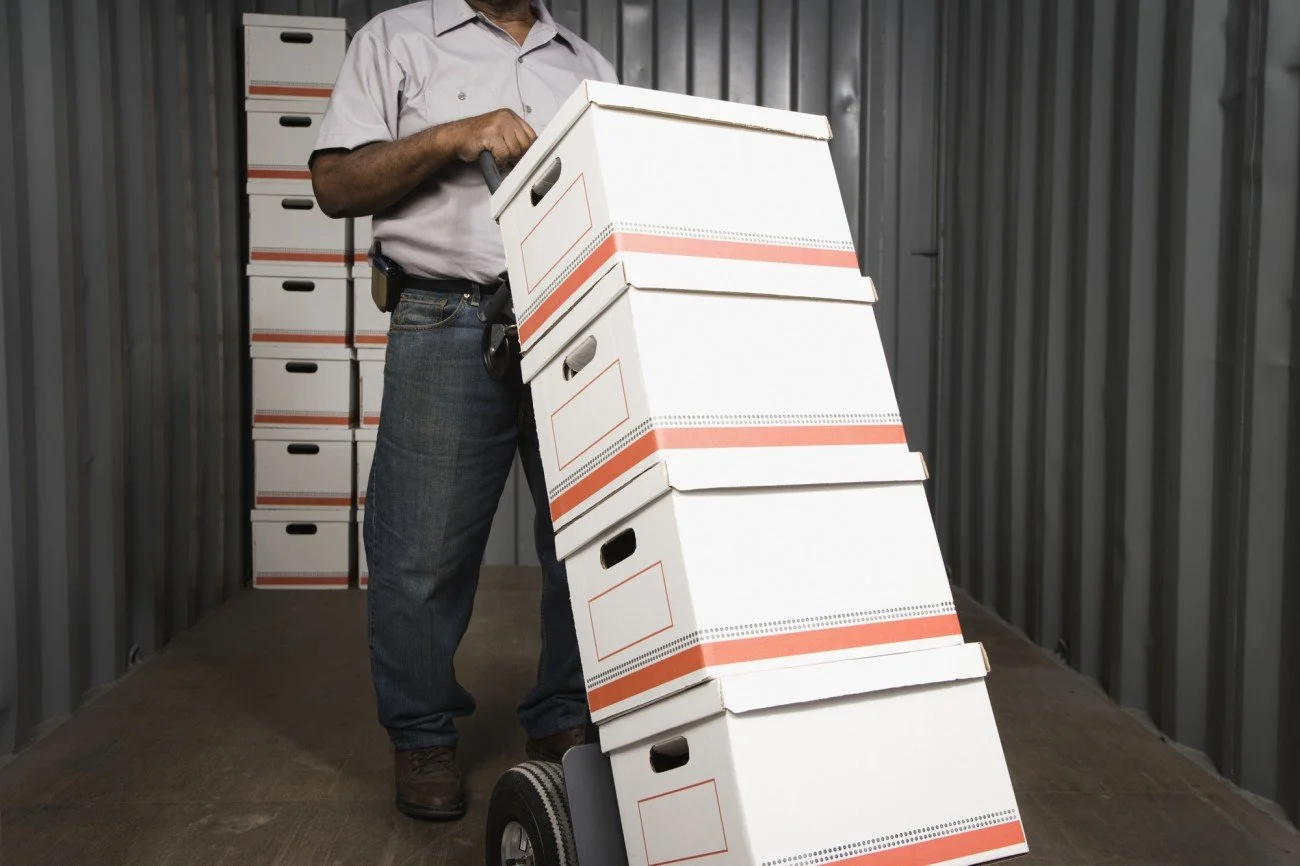
Off-site shredding means a professional provider picks up your confidential documents at your business location, transports them securely to a certified destruction facility, and shreds them there using industrial equipment. Unlike drop-off service (where you bring documents to the facility) or on-site shredding (where a truck comes to your office to shred immediately), off-site service balances convenience with security by handling transportation and destruction at a specialized location.
This option works particularly well for businesses that:
- Generate regular volumes of confidential paperwork (weekly or monthly)
- Want to avoid having staff handle sensitive documents during destruction
- Need a verifiable chain of custody for compliance purposes
- Have limited space for storing documents awaiting destruction
- Prefer predictable scheduling over arranging drop-offs themselves
For example, a Cambridge dental office might use off-site shredding to destroy old patient charts after migrating to a new practice management system. An accounting firm in Newton could schedule monthly pickups for completed tax files. A legal practice in Boston might arrange quarterly purges of closed case files. In each case, the business gains secure handling without tying up employee time.
How the Process Protects Your Information
A reputable off-site shredding service follows strict protocols to maintain confidentiality from the moment documents leave your office until they are irretrievably destroyed. Understanding these steps helps you evaluate whether a provider meets your security needs.
Secure Collection at Your Location
The process begins with prepared materials at your business. Depending on your volume and preferences, the provider may supply:
- Locked collection bins for ongoing accumulation (ideal for businesses with steady shredding needs)
- Standard boxes or bags for one-time purges
- Tamper-evident seals to confirm bins haven’t been accessed between pickups
Your staff simply places confidential paperwork into the designated containers. No sorting, staple removal, or special preparation is typically required—modern industrial shredders handle staples, paper clips, and standard office fasteners efficiently.
GPS-Tracked, Secure Transportation
Once collected, documents are loaded into enclosed, monitored vehicles. Key security features include:
- GPS tracking for real-time location monitoring
- Secure, locked compartments to prevent unauthorized access during transit
- Trained, background-checked drivers who follow strict handling protocols
- Direct transport to the destruction facility with no intermediate stops or sorting
This transportation phase is where many businesses see the highest value—they avoid the risk of having confidential materials unattended in office hallways or parking lots while waiting for pickup.
Industrial Destruction at a Certified Facility
At the provider’s NAID AAA-certified facility, documents are processed as follows:
- Identity verification and logging upon arrival
- Feeding into high-speed industrial shredders that reduce paper to confetti-sized particles (typically 5/16″ or smaller)
- Continuous monitoring to ensure complete destruction
- Immediate baling of shredded material for recycling
Unlike office shredders that may produce reconstructible strips, industrial cross-cut shredders create particles so small that reassembly is physically impossible. This level of destruction meets and exceeds HIPAA’s requirement that Protected Health Information be rendered “unreadable, indecipherable, and otherwise unreconstructable.”
Proof of Destruction: The Certificate of Destruction
Upon completion, you receive a notarized Certificate of Destruction documenting:
- Exact date and time of shredding
- Facility location where destruction occurred
- Specific method used (e.g., “cross-cut industrial shredding”)
- General description of materials destroyed (e.g., “confidential patient records”)
- Weight or volume processed
- Your business name and address
- Provider information and authorization
This document serves as auditable proof for HIPAA compliance, internal governance, or legal requirements—far more meaningful than a simple invoice or receipt.
When Off-Site Shredding Makes Sense for Cambridge Businesses
Choosing the right shredding service depends on your business’s specific needs, volume, and workflow. Off-site service often becomes the preferred option when:
Your volume exceeds what is practical for drop-off. While drop-off shredding works well for small households or occasional cleanouts, regularly transporting boxes of documents to a facility becomes inefficient for businesses with ongoing needs. A Cambridge law firm generating 100 pounds of client files monthly would spend significant staff time making repeated trips to Tewksbury—time better spent on billable work.
You Want to Avoid Internal Handling of Confidential Materials: Even with a trusted office shredder, having employees feed sensitive documents into a machine creates risk. A momentary distraction could leave partially shredded records exposed. Off-site service removes these variables entirely—your staff never sees the documents after placing them in the secure container.
You Need Compliance-Ready Documentation: Industries like healthcare, finance, and legal services often require verifiable proof of secure disposal. The Certificate of Destruction from an off-site service provides exactly that—a standardized, notarized record auditors and regulators recognize.
Space or Storage Limitations Exist: Storing months’ worth of documents awaiting shredding takes up valuable office space. Off-site service with locked bins lets you accumulate materials securely without dedicating square footage to temporary storage.
Predictable Budgeting Is Important: Many providers offer volume-based pricing with discounts for committed recurring service. Knowing your shredding cost is a fixed line item in your monthly budget that simplifies financial planning compared to variable drop-off or one-time purge expenses.
Fun Statistics and Facts About the Off-Site Shredding Industry
While the focus here is on practical business applications, it’s fascinating to consider how the off-site shredding segment has evolved—especially as it relates to small and medium-sized businesses in professional services. These facts help explain why off-site service has become a go-to solution for companies serious about information security:
- Off-site shredding now accounts for approximately 65% of all commercial shredding service revenue in the United States, surpassing both on-site and drop-off models for business customers due to its balance of security, convenience, and scalability.
- The average small business in the professional services sector (legal, accounting, medical) generates between 150-300 pounds of confidential paper per month—enough to make off-site service significantly more time-efficient than managing destruction internally.
- A single NAID AAA-certified off-site shredding facility can process over 100,000 pounds of paper per day, equivalent to destroying the monthly confidential output of roughly 400 mid-sized professional offices.
- GPS-tracked transport has reduced transit-related security incidents by over 90% compared to untracked vehicles, giving businesses verifiable proof that their documents never left a monitored chain of custody.
- Cross-cut industrial shredders used in off-site facilities operate at speeds of 6-8 tons per hour—meaning a typical office cleanout (1,000 pounds of paper) is destroyed in under 5 minutes once it reaches the facility.
- Studies indicate that businesses using professional off-site shredding spend up to 50% less time on document disposal management than those relying on in-house methods when factoring in labor, equipment maintenance, and the cognitive load of tracking destruction status.
- The recycling rate for shredded paper from off-site services exceeds 95% in certified facilities, meaning nearly all destroyed documents are repurposed rather than landfilled—supporting both security and sustainability goals.
- Chemical-free shredding processes (relying solely on mechanical separation) dominate the off-site market due to their simplicity, reliability, and lack of hazardous waste byproducts.
- Modern off-site facilities are increasingly using automated weighing and scanning systems when documents are checked in, which helps to minimize mistakes in reporting the amount and gives customers accurate and trustworthy information about the destruction process.
- For businesses handling HIPAA-covered information, off-site shredding with a proper Certificate of Destruction satisfies both the Privacy Rule (regarding use and disclosure) and Security Rule (regarding safeguards) requirements for disposal.
These figures illustrate why more Cambridge small businesses in sectors like healthcare, legal, accounting, and financial services are choosing off-site shredding over internal methods—not just for compliance, but for genuine operational efficiency and risk reduction.
Comparing Off-Site to Other Service Types
Understanding how off-site shredding stacks up against alternatives helps you make an informed decision for your Cambridge business.
Off-Site vs. Drop-Off Shredding
Drop-off requires you to transport documents to the facility. It’s most economical per pound but demands your time and effort. Choose drop-off if:
- You have a small, manageable volume (under 50 pounds per month)
- Your business is very close to the facility (e.g., a Tewksbury-based office)
- Staff time is abundant and transportation is convenient
Off-site adds pickup convenience but increases cost slightly due to transportation and labor. Choose off-site if:
- You generate regular volumes over 50 pounds monthly
- You prefer staff to focus on core responsibilities rather than document transport
- You value the documented chain of custody from your office to destruction
Off-Site vs. On-Site Shredding
On-site brings a shredding truck to your office for immediate destruction. It offers the ultimate convenience of watching destruction happen but comes at a premium price. Choose on-site if:
- You have extremely high-security needs (e.g., classified government contractors)
- You require immediate verification of destruction (witnessed service)
- Your volume is inconsistent but highly time-sensitive
Off-site is typically 30-40% less expensive than on-site service for equivalent volumes while providing equivalent security through facility-based destruction and documented processes. Choose off-site if:
- You want secure destruction without the premium cost of on-site trucks
- Your business hours make scheduling a truck visit disruptive
- You don’t require visual confirmation of the shredding moment (the Certificate of Destruction provides sufficient proof)
Off-Site vs. In-House Office Shredders
Relying solely on an office machine involves:
- Labor costs for staff feeding paper
- Equipment purchase, maintenance, and replacement
- Inconsistent security (strip-cut vs. cross-cut variability)
- Limited volume capacity (most office shredders jam over 10-15 sheets)
- Time diverted from revenue-generating activities
Off-site service eliminates all these hidden costs. Even when factoring in the service fee, businesses often save money by reallocating staff time to higher-value tasks. For example, a Cambridge dental assistant earning $25/hour who spends 3 hours monthly feeding an office shredder loses $90 in potential productivity—often exceeding the cost of professional off-site service for the same volume.
Real-World Cambridge Business Examples
To illustrate how off-site shredding works in practice, consider these typical scenarios faced by businesses in our service area:
Scenario 1: Cambridge Dental Practice (Monthly Service)
A dental office with two practitioners generates approximately 200 pounds of confidential material monthly: old patient charts, billing records, insurance documents, and signed consent forms. They opt for biweekly off-site pickup service using locked 65-gallon bins.
- Each pickup: ~100 pounds
- Service includes secure bin exchange, GPS-tracked transport to Tewksbury facility, industrial shredding, notarized Certificate of Destruction
- Staff involvement: ~5 minutes per pickup to swap bins
- Monthly cost: approximately $180-200 (volume-adjusted rate from base of 99 cents per pound)
- Outcome: Clinical staff spend zero time on document destruction; compliance documentation is automatic; office space remains uncluttered by temporary storage
Scenario 2: Newton Accounting Firm (Quarterly Purge)
An accounting office in Newton handles tax preparation for 150 clients annually. After April 15th, they have approximately 800 pounds of completed returns, work papers, and correspondence to destroy. They schedule a one-time off-site purge.
- Service includes delivery of locked bins, 2-week accumulation period, pickup, transport, destruction. Certification
- Staff involvement: ~15 minutes to load documents into provided bins
- Total cost: approximately $750-800 (volume discount applied to base rate)
- Outcome: Post-tax-season cleanup completed in under 30 minutes of staff time; secure chain of custody documented; offices ready for summer workflow without backlog
Scenario 3: Andover Legal Practice (As-Needed Service)
A small law firm in Andover accumulates confidential client files irregularly—sometimes 50 pounds, sometimes 300 pounds—depending on case closures. They use on-demand off-site service.
- Service includes request-based bin delivery, flexible pickup scheduling, transport, destruction, Certification
- Staff involvement: minimal (place files in bin when ready for pickup)
- Cost: charged per pickup at volume-adjusted rates (still starting from 99 cents per pound base)
- Outcome: No accumulation of outdated files in office; secure handling for sensitive legal documents; predictable process aligned with case workflow
What to Look for in an Off-Site Shredding Provider
Not all off-site services deliver the same level of security, reliability, or value. Cambridge businesses should evaluate providers based on these criteria:
Certifications and Audits: Look for NAID AAA certification—the industry’s highest standard—which requires unannounced audits of personnel security, operational security, and media destruction processes. Ask to see their current certificate and audit reports.
HIPAA and Regulatory Experience: If you handle medical, financial, or legal records, confirm the provider has specific experience serving your industry. Request references from similar businesses in the Cambridge area.
Transportation Security: Verify that vehicles are:
- GPS-tracked with real-time monitoring
- Enclosed and locked during transit
- Operated by background-checked, trained drivers
- Sealed to prevent tampering
Facility Standards
The destruction facility should:
- Be NAID AAA-certified (verifiable via NAID website)
- Have controlled access points and surveillance
- Maintain employee background check protocols
- Follow environmental standards for recycling
- Documentation Quality
Review a sample Certificate of Destruction to ensure it includes: - Specific destruction method (not vague terms like “secure destruction”)
- Exact facility address and date/time
- Detailed material description (e.g., “dental patient records”)
- Weight or volume measurement
- Notarization option
- Clear provider and customer information
Pricing Transparency: Choose providers with clear, upfront pricing. Avoid those with hidden fees for fuel, mileage, bin rental, or administration. Our pricing page, for example, lists paper shredding starting at 99 cents per pound with no minimums for drop-off service—off-site service adds only the transportation and handling component.
Local Service Reliability: Confirm they consistently serve your specific town in the Boston metro area. Ask about:
- Average response time for pickup requests
- Procedures for missed or rescheduled services
- References from businesses in Cambridge, Newton, or your specific neighborhood
The Hidden Cost of Not Using Professional Off-Site Shredding
Many businesses underestimate the true cost of handling document destruction internally. Beyond the obvious price of an office shredder, consider these often-overlooked expenses:
Staff Time Value
If your office manager earns $30/hour and spends 2 hours monthly managing an in-office shredder, that’s $720 annually in diverted productivity—time that could support patient care, billable work, or business growth.
Equipment Inefficiency
Office shredders require:
- Purchase ($100-$500+ for a decent cross-cut model)
- Regular maintenance (oil, blade sharpening)
- Replacement every 2-3 years due to wear from staples and paper clips
- Storage space when not in use
Inconsistent Security
Strip-cut shredders produce ribbons that, under certain conditions, can be reassembled—especially if the waste bag is left accessible. Even cross-cut models vary in particle size, and user error (overfeeding, wrong paper type) can compromise security.
Opportunity Cost
While an employee feeds paper into a shredder, they’re not:
- Greeting patients or clients
- Processing payments or insurance claims
- Managing appointments or schedules
- Handling phone messages or emails
Compliance Risk
Inconsistent destruction practices increase the chance of accidental PHI exposure—a single improperly discarded patient record could trigger a HIPAA breach investigation with potential fines, legal fees, and reputational damage. Research shows that companies that only use their own methods often end up spending the same or more when you include costs for workers, equipment, and risks—so hiring a professional off-site service can often be the cheaper option when you look at all expenses.
Taking the Next Step: Evaluating Off-Site Service for Your Cambridge Business
If you’re considering off-site shredding for your Cambridge business, the best first step is to assess your actual needs. Walk through your office and estimate:
- How many pounds of confidential paperwork you generate monthly
- How often you’d like service (weekly, bi-weekly, monthly, or as-needed)
- Whether you prefer locked bins for ongoing accumulation or on-demand pickup
- What level of documentation you require (standard Certificate of Destruction vs. notarized version)
Once you have a rough idea, reach out for a personalized quote. We offer free, no-obligation estimates based on your specific volume, service type, and location within our service area (Cambridge, Boston, Newton, Andover, Worcester County, or surrounding communities).
You can also:
- Review our off-site shredding service page for a detailed overview of our process, security features, and customer testimonials
- Visit our FAQ page for answers to common questions about preparation, scheduling, and our destruction process
- Explore our About Us page to learn about our history since 2007, our NAID AAA-certified facility, and our commitment to serving Massachusetts businesses
- Check our pricing page for current rates (remember: paper shredding starts at 99 cents per pound)
- Contact us directly to discuss your needs, request a sample, Certificate of Destruction, or arrange a trial service
Whether you’re a dental office in Cambridge managing patient records, an accounting firm in Newton handling tax files, or a legal practice in Boston protecting client confidentiality, off-site shredding offers a practical way to meet your security needs without sacrificing operational efficiency. By choosing a professional provider with established routes, certified facilities, and transparent processes, you gain peace of mind, free up valuable staff time, and demonstrate to your clients and patients that their information is always handled with the care it deserves—from the moment it leaves your office until it’s gone for good.